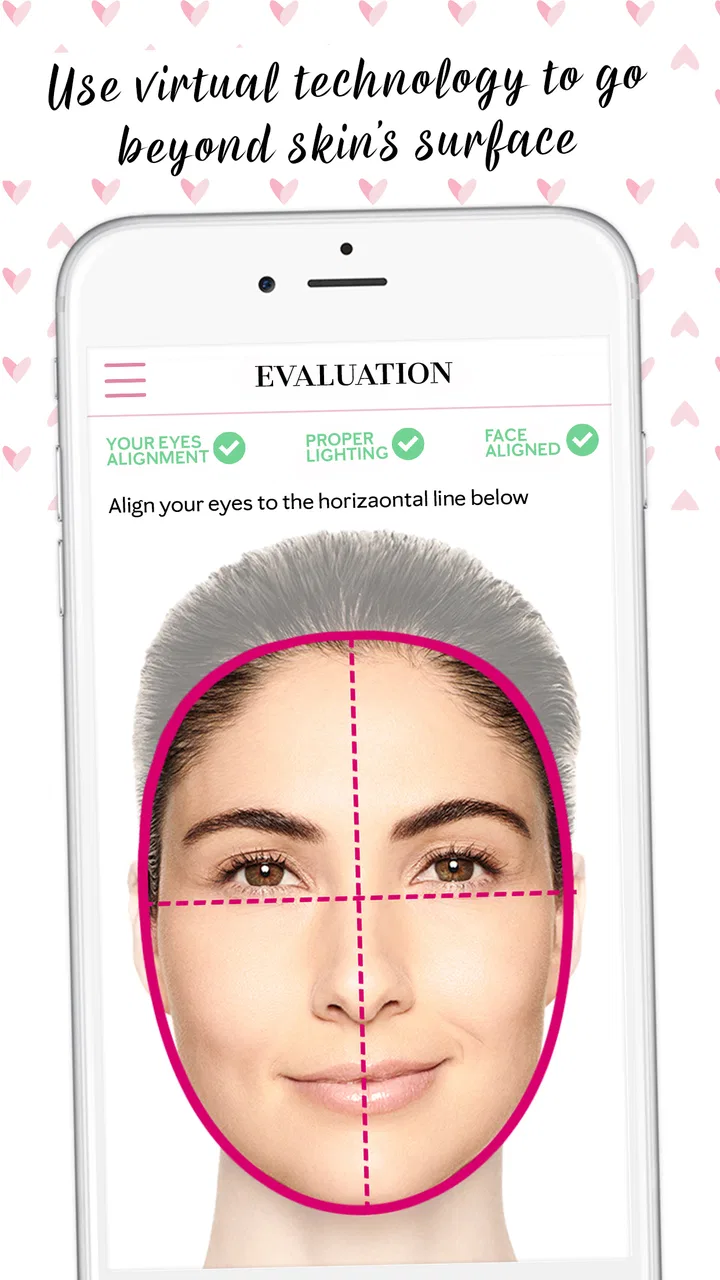
Mary Kay® Skin Analyzer
- 4.6
- Rating
- 100.00K
- Installs
- Free
- Price

 Analysis by App-foxy
I approached Mary Kay® Skin Analyzer as a practical beauty app rather than a novelty camera tool. Developed by Mary Kay, Inc, it is designed to connect skincare decisions with technology, giving you a more guided way to think about your routine. My first impression was that its value depends less on opening it once and more on whether it helps you make calmer, more consistent choices over time.
That distinction matters. Many beauty apps are enjoyable for a few minutes because they offer a quick scan, a visual effect, or a product suggestion. The harder question is what remains useful after the first week, when the curiosity has gone. In my experience, this app is most appealing to people who want a structured skincare check-in and are willing to use its guidance as part of a routine, not as a replacement for professional medical advice.
From first-week curiosity to a repeatable skincare habit
The first few sessions are naturally the most interesting. You can explore the idea of using technology to look more closely at your skin instead of relying only on memory or a mirror. That can make an ordinary skincare routine feel more deliberate. Rather than applying products automatically, I found myself thinking about what I was trying to improve, what I was already using, and whether my routine was actually consistent.
You May Also Like

 Blood Strike: 2.5 Anniversary
Blood Strike’s Loadouts Turn Every Drop Into a Tactical Gamble
A close look at Blood Strike’s custom loadouts: how fast access to signature weapons reshapes its battle royale rhythm, rewards preparation, and narrows the gap between fights.

 Pandora - Music & Podcasts
Pandora’s Music Is Easy to Start, but Harder to Recover
Pandora’s strength is its low-effort path from a seed to a station. Its weak spot is how much confidence it asks you to place in connection, setup, and quiet recovery.

 8 Ball Pool
 Is Built on Rivalries, Rematches, and Routine
A close look at the rivalries, rematches, shared routines, and unanswered safety questions that turn a quick pool match into a persistent mobile community.

 Samsung Music
’s Quiet Strength Is Playing What You Already Own
Its reach comes less from spectacle than from dependable access to a personal library. That simplicity is both the app’s strongest retention engine and its ceiling.

 AccuWeather: Weather Radar
AccuWeather Review: A Quick, Clear Forecast for Everyday Decisions
For everyday plans, the best forecast is the one you can understand quickly. AccuWeather makes rain timing, radar, and local conditions easy to act on, with a few trade-offs.

 Hill Climb Racing
Why Hill Climb Racing Still Turns Crashes Into One More Run
A tiny car, a bumpy hill and one more upgrade: Hill Climb Racing keeps resurfacing because its simple chaos makes every near-miss feel personal.
More From Our News Desk



The app’s strongest early appeal is its focus. It is not trying to be a general beauty magazine, a social network, or a full makeup editor. Its purpose is narrower: helping you examine skincare in a more guided way. That makes it easier to understand than an app packed with unrelated beauty content, especially if you are new to building a routine.
A realistic everyday use case would be checking your skin before getting ready for work, then using the result as a reminder to keep the rest of your routine simple. I would not treat one session as a final judgment about my skin. Lighting, camera position, facial expression, and the condition of your skin that day can all affect how useful the experience feels. The better approach is to use it as a prompt for observation rather than a definitive diagnosis.
The most useful habit is consistency, not repeated checking. If you use the analyzer every time you feel uncertain, you may end up chasing small changes that are not meaningful. A more sensible workflow is to keep your routine stable, use the app occasionally, and note whether its guidance helps you make a clearer decision. This prevents the technology from turning skincare into constant self-inspection.
What makes the first sessions worthwhile
For someone who normally chooses products by packaging, scent, or whatever appears in a short video, the app can introduce a more thoughtful process. It encourages you to start with your skin rather than with a product claim. That shift is valuable because skincare usually works better when the routine matches a person’s actual concerns and tolerance.
I also like the possibility of using it before shopping. Instead of walking into a beauty store with a vague feeling that your skin needs “something,” you can first organize your thoughts around what you want from a routine. That does not mean the app should make the decision for you, but it can help you ask better questions and avoid buying several unrelated products at once.
The experience is particularly approachable for people who feel overwhelmed by skincare terminology. A beginner may not know how to compare different concerns or decide which steps matter most. A guided analyzer gives that person a starting point, even if the final routine still requires common sense and patience.
Where the novelty starts to fade
After the first week, the excitement naturally becomes quieter. You already understand the basic interaction, and another check does not automatically produce a new insight. This is where the app needs to earn its place. Its recurring value comes from helping you remember your priorities and review your routine, not from providing endless entertainment.
If you expect dramatic discoveries every time you open it, you may become disappointed. Skin changes gradually, and an app cannot make that process faster. In fact, the most responsible way to use a tool like this is to resist changing everything after every session. A new product, a different cleansing pattern, weather, stress, and sleep can all affect how your skin feels. Changing several things at once makes it difficult to know what helped.
I would use the analyzer at a sensible interval, then give any routine adjustment enough time to show whether it suits me. I would also take notes outside the app if I wanted to compare how my skin feels from one period to another. The analyzer can support that process, but it should not become the only record of your experience.
Month-to-month value depends on discipline
The app becomes more useful when it is connected to a repeatable monthly routine. For example, I could use it at the beginning of a month to review my skincare goals, keep the rest of my products unchanged, and revisit the situation later. This turns the app from a one-time experiment into a small planning tool.
That approach also reveals an important trade-off: the app may help you organize your thinking, but it cannot create commitment for you. If you regularly skip cleansing, moisturising, or other parts of your personal routine, no analysis screen can compensate for that inconsistency. Its long-term benefit is therefore closely tied to whether you act on what you learn.
For users already interested in skincare analysis, the monthly value can come from reducing guesswork. You may become better at separating a temporary concern from a pattern. That is more useful than reacting to every small imperfection. The app can encourage a slower, more measured approach, especially for people who tend to buy a new product whenever they feel dissatisfied.
There is also value in using it as a conversation aid. If you consult a beauty adviser, you can explain what you have noticed and what you are trying to improve instead of describing your concerns in very general terms. I would still keep expectations realistic: an app-based assessment is not the same as an examination by a dermatologist, and persistent irritation or serious skin problems deserve professional attention.
A better workflow for recurring use
My preferred workflow would be simple. I would begin with clean, comfortable skin and use similar conditions whenever I compare sessions. I would avoid treating a single result as a command to purchase something. Instead, I would write down the main concern, check whether it matches what I have noticed in daily life, and make only one meaningful adjustment at a time.
That last point is easy to overlook. If the app encourages you to consider several areas at once, it is tempting to redesign your entire routine. I think that is the wrong way to preserve long-term value. A smaller change is easier to maintain, easier to evaluate, and less likely to leave you with a crowded shelf of products you do not enjoy using.
Another useful habit is to review whether the advice fits your lifestyle. A routine that looks sensible on paper may be too complicated for someone who travels frequently, works irregular hours, or dislikes multiple steps. The best recommendation is the one you will actually follow. The app is more helpful when it supports that honest assessment instead of encouraging perfection.
Mary Kay® Skin Analyzer is free, which lowers the barrier to trying it. Its content rating is Everyone, so it is positioned as an accessible beauty tool rather than an age-restricted product. The app has a four-point-five average from around one thousand one hundred ratings, with over four hundred written reviews, and it has passed one hundred thousand installs. Those figures suggest that it has found a real audience, although popularity alone does not guarantee that its approach will suit every skincare style.
Maintenance burden and the small frictions that matter
The maintenance burden is not mainly about complicated setup. It is about keeping your use consistent without allowing the app to dominate your routine. You need to approach each session in reasonably similar conditions if you want comparisons to feel meaningful. If you use it under different lighting or immediately after applying products, the experience may be harder to interpret.
That can be a practical inconvenience. Many people want skincare advice at the exact moment they are rushing out of the house, while the most useful comparison requires a little more care. If you are unwilling to slow down for that, the analyzer may feel less helpful than a simple routine tracker or a trusted professional consultation.
There is also a mental maintenance cost. Beauty technology can make users more aware of tiny details they would otherwise ignore. For some people, that awareness is motivating. For others, it can become tiring or increase dissatisfaction with normal skin texture. I would recommend using the app with a clear boundary: it should help you care for your skin, not persuade you that your face needs constant correction.
Another limitation is that digital guidance can feel more precise than it really is. A polished interface may give an impression of authority, but skincare is affected by personal history, allergies, medication, climate, hormones, and habits that an app cannot fully understand from a brief interaction. I would never use it to dismiss discomfort or to delay professional help.
Who should use it, and who should choose something else
I think the app is a good fit for a beginner who wants a more organized starting point, a Mary Kay customer who wants technology connected to skincare decisions, or anyone who enjoys reviewing routines instead of shopping impulsively. It may also suit people who like having a guided prompt before speaking with a beauty adviser.
I would be more cautious if you already have a carefully established routine that works well and you do not want to monitor it. In that situation, the analyzer may add another layer without improving your results. Someone with persistent acne, painful inflammation, sudden changes, or suspected sensitivity should choose professional medical advice over an app-based assessment.
It may also be the wrong choice for users who want a broad product database, ingredient-by-ingredient research, or a detailed personal journal. A dedicated skincare diary can be better for tracking dates and reactions, while a dermatologist can offer a more complete assessment of medical concerns. The analyzer occupies a middle ground: more focused than casual beauty browsing, but not a substitute for clinical care or comprehensive research.
What causes fatigue over time
The main source of fatigue is repetition without a clear decision attached to it. If you keep opening the app simply to see whether your skin looks different, the process can become a loop. The novelty fades because the action is no longer connected to a useful next step.
Another source is overinterpretation. A user may expect the app to explain every fluctuation, even though daily skin condition is not perfectly stable. When the result does not match how the skin feels, confidence can drop. I found it more productive to treat the app as one input among several: personal comfort, visible changes, routine consistency, and professional guidance when needed.
There is also a risk of turning recommendations into shopping pressure. The app’s connection to Mary Kay, Inc is relevant here because some users may naturally associate the experience with considering that company’s beauty products. I would keep the evaluation separate: first decide what your skin actually needs, then consider whether a suggested product fits your budget, preferences, and routine. Free access does not mean every purchase connected with the experience is necessary.
That separation is especially important for people who are easily influenced by attractive presentation. A well-organized beauty tool can make a recommendation feel personal, but personal-looking guidance still deserves the same practical questions you would ask anywhere else. Is the step comfortable? Can you maintain it? Does it fit with products you already use? Will you know which change produced the result?
One way to reduce fatigue is to give the app a defined job. I would use it for periodic reflection, not as a daily inspection. I would also stop using it temporarily if it made me anxious, overly focused on minor imperfections, or tempted to change several products at once. A skincare tool should support confidence and consistency; if it creates the opposite effect, taking a break is the sensible choice.
Does it earn permanent space?
Mary Kay® Skin Analyzer earns a place on my phone for a specific kind of user: someone who wants a gentle technological prompt for skincare and is prepared to turn that prompt into a manageable habit. Its best quality is not that it makes skincare feel futuristic. It is that it can encourage more deliberate decisions than random product browsing.
Its lasting value is more limited for experienced users who already know their routine, people seeking medical answers, and anyone who dislikes repeated self-assessment. Those users may get more from a simple notes app, a focused ingredient reference, or a qualified skincare professional. The analyzer is useful precisely because it is approachable, but that simplicity also means it should not be mistaken for a complete skincare system.
The app runs on Android devices using version 6.0 or later, and its current version is 1.5. It was released on January 15, 2019, so it is not a brand-new experiment, yet its continued presence and user interest make it easy to consider as an established option in the beauty category. I would still judge it by how well it fits my routine rather than by its age or install count.
My final recommendation is to try it with a plan. Use it when you have a genuine skincare question, keep your comparisons as consistent as possible, change one thing at a time, and give your routine enough time before drawing conclusions. If you follow that approach, the app can remain useful after the first-week novelty fades. If you want instant answers, constant new discoveries, or medical-level certainty, it is unlikely to satisfy you.
In short, I see it as a practical companion rather than a miracle evaluator. It has enough focus to help beginners become more intentional, and its free access makes experimentation easy. The lasting benefit comes from restraint: using the technology to build a calmer routine, then putting the phone down and letting consistent skincare do the real work.
FAQs for Mary Kay® Skin Analyzer
01What is the Mary Kay® Skin Analyzer app?
The Mary Kay® Skin Analyzer app is a tool designed to assess your skin's condition using advanced facial recognition technology. By analyzing your skin, the app provides personalized product recommendations from Mary Kay® to address specific skin concerns, such as uneven tone or fine lines. It's a convenient way to tailor your skincare routine.
02How does the Mary Kay® Skin Analyzer app work?
The app uses your device’s camera to capture an image of your face, which it then analyzes for various skin attributes. It evaluates factors like texture, firmness, and pigmentation. Based on this analysis, the app suggests Mary Kay® products that can help improve your skin’s health and appearance.
03Is the Mary Kay® Skin Analyzer app free to use?
Yes, the Mary Kay® Skin Analyzer app is free to download and use. However, keep in mind that while the app itself doesn’t charge, the recommended products are available for purchase. The app serves as a guide to enhance your skincare regimen with Mary Kay® products.
04What devices are compatible with the Mary Kay® Skin Analyzer app?
The app is available for both Android and iOS devices. It requires a device with a front-facing camera capable of capturing high-resolution images to ensure accurate skin analysis. Make sure your device meets these requirements before downloading the app to get the best results.
05Can the Mary Kay® Skin Analyzer app replace a dermatologist consultation?
While the app provides valuable insights into your skin's condition, it should not be considered a substitute for professional dermatological advice. For any serious skin concerns or conditions, it's always best to consult with a qualified dermatologist who can offer a comprehensive evaluation and treatment plan.
Pros
- Accurate skin analysis results.
- User-friendly interface design.
- Comprehensive product recommendations.
- Quick scan and analysis process.
- Supports multiple skin profiles.
Cons
- Requires stable internet connection.
- Limited language options.
- May not recognize all skin tones.
- Occasional app crashes reported.
- No offline mode available.

Mary Kay® Skin Analyzer
Gallery